
Springs Past Their Rated Life
Torsion springs that have simply cycled past their rated life after decades of twice-daily openings. Age and use, not cold, do the damage in this mild temperate area.
Camarillo, CA
Local garage door repair in Camarillo, from Somis to Santa Rosa Valley, covering spring, opener, and track fixes for original hardware that has aged out.
Popular Services
Garage door services


What breaks around here
With the climate running mild temperate through this area, we don't see the freeze-cracked seals or ice-jammed tracks that garages in colder regions deal with. What we do see is wear from age and use: torsion springs that have simply cycled past their rated life after decades of twice-daily openings, nylon rollers that have gone brittle and started chipping the track, and cables fraying at the drum from years without lubrication. Garage door openers from the 1980s and 90s - the ones without modern safety reversal - are another common call, usually when a sensor finally fails for good. Because so much of the housing stock here dates to the 1960s and 70s, we also run into doors with hardware sizes and mounting styles that newer universal kits don't quite match, which is where knowing the local building stock actually matters on the job.
Torsion springs that have simply cycled past their rated life after decades of twice-daily openings. Age and use, not cold, do the damage in this mild temperate area.
Nylon rollers that have gone brittle over the years and started chipping the track as the door runs, a steady call on homes of this age.
Lift cables fraying at the drum from years without lubrication, the kind of slow wear an older door builds up quietly until it finally lets go.
Garage door openers from the 1980s and 90s, the ones without modern safety reversal, are another common call - usually when a sensor finally fails for good.
Because so much of the housing stock dates to the 1960s and 70s, we run into hardware sizes and mounting styles that newer universal kits don't quite match.
What you pay for
You're paying for a correct diagnosis and a part that fits your door the first time, not a truck roll and a guess. That difference is the whole job on an older door, where the wrong part on the truck means a second trip instead of a fix.
With median household income in the service area at $126,937 and roughly 25,364 owner-occupied houses among the 51,208 households here, this is a market where people own their homes and expect a repair to hold - not a patch job that calls us back in six months.
We price the job, not the minute, and we tell you up front what's springs-and-labor versus what's a part we need to order. We don't carry every opener model on the truck; some parts for older or less common units take a few days to source, and we'll tell you that instead of pretending otherwise.
Local housing matters

Most of the houses we work on went up between 1956 and 1997, with the median landing around 1976. That's a wide window, but it covers a real pattern: a lot of these homes are pushing fifty years old, and the garage door hardware that came with them has aged right along with the roof and the water heater.
We work across the service area's 14 named communities - from Somis four miles out to Santa Paula and Moorpark ten minutes the other direction - and the story on most streets is the same. Original torsion springs that have never been replaced. Openers from a renovation two decades back that are now the oldest moving part in the house. Steel panels that have taken forty years of sun and salt air without a second coat of paint.
If your door still has the chain-drive opener your parents or the original builder put in, you're not unusual here - you're the median. We don't assume every house is the same age, but we do assume the hardware is old enough that parts stocked on a truck ten years ago may not be the parts your door needs today.
What happens when you call
You tell us what the door is doing, we ask enough questions to bring the right parts the first time, and once we're at the house we look at the whole system before we touch anything - with a number agreed up front that doesn't change mid-job.
Won't open, open but won't close, loud bang and now it's stuck, opener runs but the door doesn't move - we ask enough questions to bring the right parts the first time.
A lot of call centers for this trade send a truck and a guess. On a torsion spring job especially, guessing wrong means a second trip, so we'd rather ask three extra questions on the phone.
Once we're at the house we check track alignment, cable wear, roller condition, and opener age - because a spring that just broke on a thirty-year-old door often isn't the only thing close to failing.
We give you a number before we touch anything, and that number doesn't change once we're elbow-deep in the job.
If a Part Isn't on the Truck
If something turns out to need a part we don't carry on the truck, we tell you that straight, rather than padding the invoice with a workaround.
When to stop fixing it
Here's the honest limitation: not every door is worth repairing, and we'll say so. At some point the labor to keep patching an original door costs more over a few years than replacing it once, and we'd rather tell you that on the first visit than sell you a spring now and a new door next year. We look at the whole door, not just the part that broke, before we tell you which side of that line you're on.
A steel door from the 1970s with rust working through the bottom panel, rotted-out wood trim, and an opener that's already died twice - putting a new spring on it is throwing good money after bad.
At some point the labor to keep patching an original door costs more over a few years than replacing it once, and we'll say so rather than string together repairs.
A door from the same era with a clean frame and sound panels is often a great repair candidate - the hardware fails long before the structure does.
We look at the whole door, not just the part that broke, before we tell you which side of the repair-or-replace line you're on.
Original hardware, aged in place
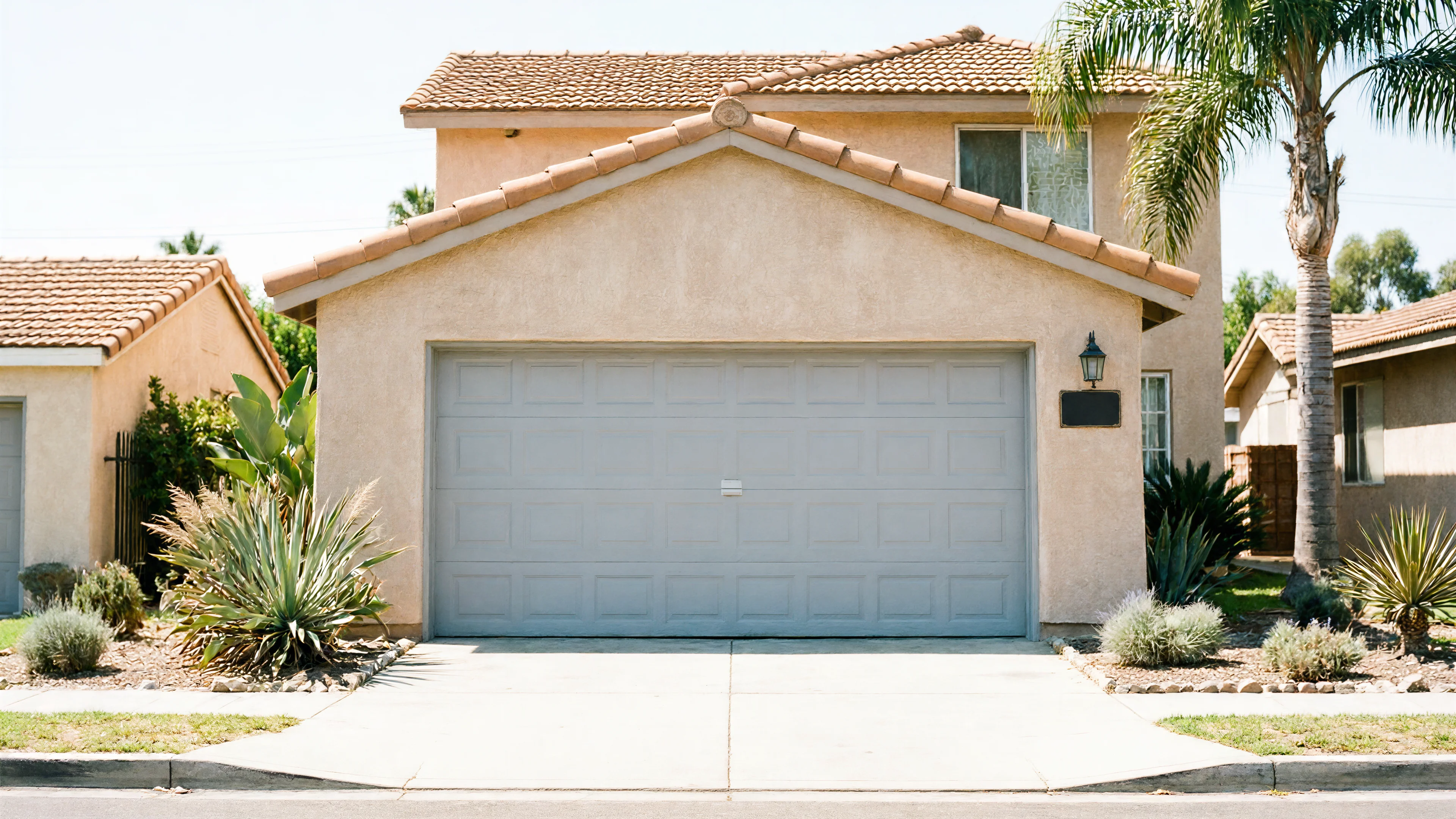
The garage door hardware on these homes has aged right along with the roof and the water heater. Across the 14 named communities we cover, the same original parts keep turning up, old enough that a truck stocked for newer doors doesn't always carry what fits.
Original torsion springs that have never been replaced, still running on houses pushing fifty years old after decades of twice-daily openings.
Openers from a renovation two decades back that are now the oldest moving part in the house, often the chain-drive unit the original builder put in.
Steel panels that have taken forty years of sun and salt air without a second coat of paint, so the door shows its age long before the hardware does.
Hardware old enough that parts stocked on a truck ten years ago may not be the parts your door needs today, which is why local knowledge matters on the job.
 8 areas covered
Towns we serve
We work across the service area's 14 named communities - from Somis four miles out to Santa Paula and Moorpark ten minutes the other direction - and the story on most streets is the same older housing stock.
From our Camarillo, CA base we run trucks across the surrounding towns rather than keeping a storefront in each one. These are the areas we serve most often - pick yours to see the local detail.
Questions
Most homes in the service area were built between 1956 and 1997, with the bulk from the 1960s and 70s. That means a lot of original torsion springs, older steel panels, and openers installed well before modern safety-reversal standards - all common reasons for a service call.
Yes. We cover the surrounding communities too, including Somis, El Rio, Santa Rosa Valley, Santa Paula, and Moorpark, along with other nearby areas in the service region.
Sometimes. If the door is rusted through, the panels are warped, or the opener has failed more than once, a new door often costs less over time than repeated repairs on an old one. We'll tell you honestly which side of that line your door is on.
We don't stock every opener model or hardware size on the truck, especially for older or less common units common in homes built decades ago. When that happens, we tell you up front rather than guessing and making a second trip.
Ready when you are
Camarillo Garage Door Pros repairs and installs garage doors, springs and openers in Camarillo, CA and the surrounding area.